
【Event Recap】Symposium – Multifaceted Approach to Eliminating Racial Discrimination
March 27, 2026
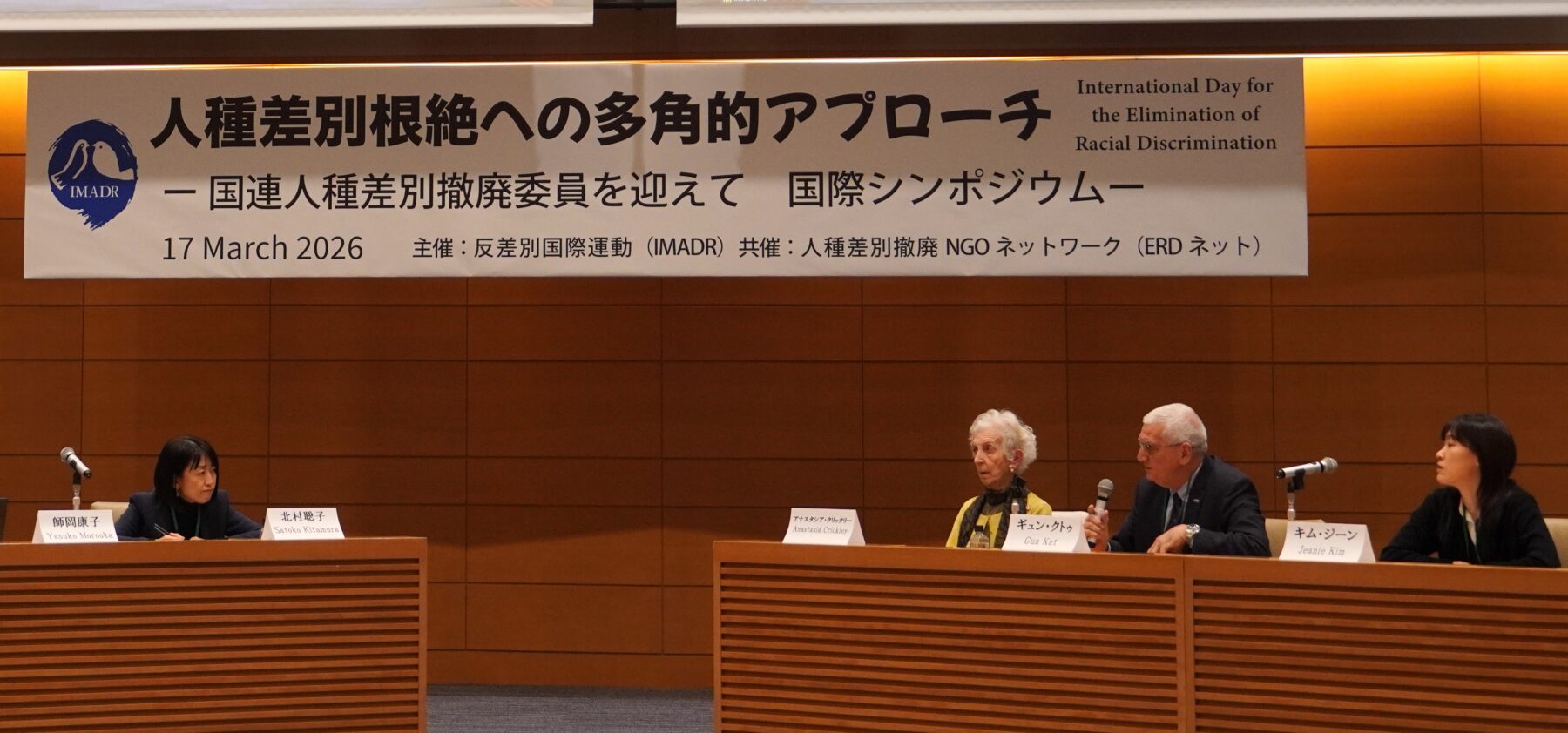
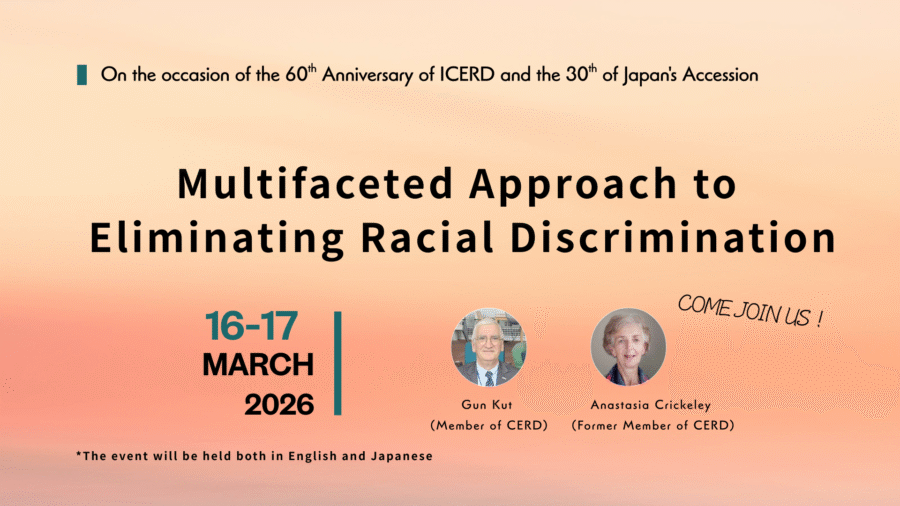
It has been 30 years since Japan acceded the International Convention on the Elimination of All Forms of Racism and Discrimination (ICERD). Considering the little progress the implementation of ICERD in the country, IMADR organised International Consultation on 16 March and Symposium on 17 March, bringing together experts on ICERD as well as representatives from a Korean NGO and stakeholders, to explore ways to advance human rights in Japan.
Focusing on List of Issues Prior to Reporting (LOIPR) adopted by CERD in December 2025*, the International Consultation explored ways to achieve and strategies to build a society free from racism. The Symposium focused on initiatives to eliminate racial discrimination at both international and national levels. This article offers a glimpse into the Symposium and its key discussions.
*Joint NGO reports for LOIPR by Japan NGO Network for the Elimination of Racial Discrimination (ERD Net) can be found here.
Insights from UN experts and a representative of Korean NGO
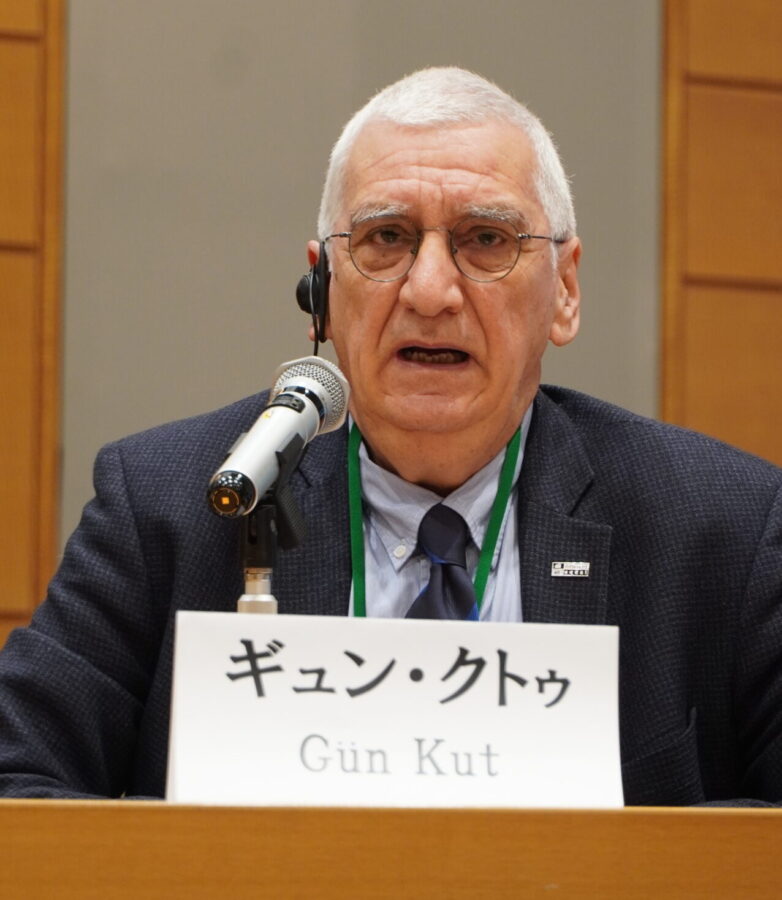
◉ Role of CERD in combating racial discrimination
– Gün KUT
(Current member of CERD)
“One of the Committee’s main activities is considering State party’s reports. Through the review, the Committee is here to help the State party identify issues of racial discrimination under ICERD and provide recommendations on how to address them. So, the more willingly the State party takes action, the greater our progress in combating racial discrimination. Conversely, the combat against racial discrimination usually weakens or fails when political will weakens or fails”.
◉ How the international community has addressed racial discrimination 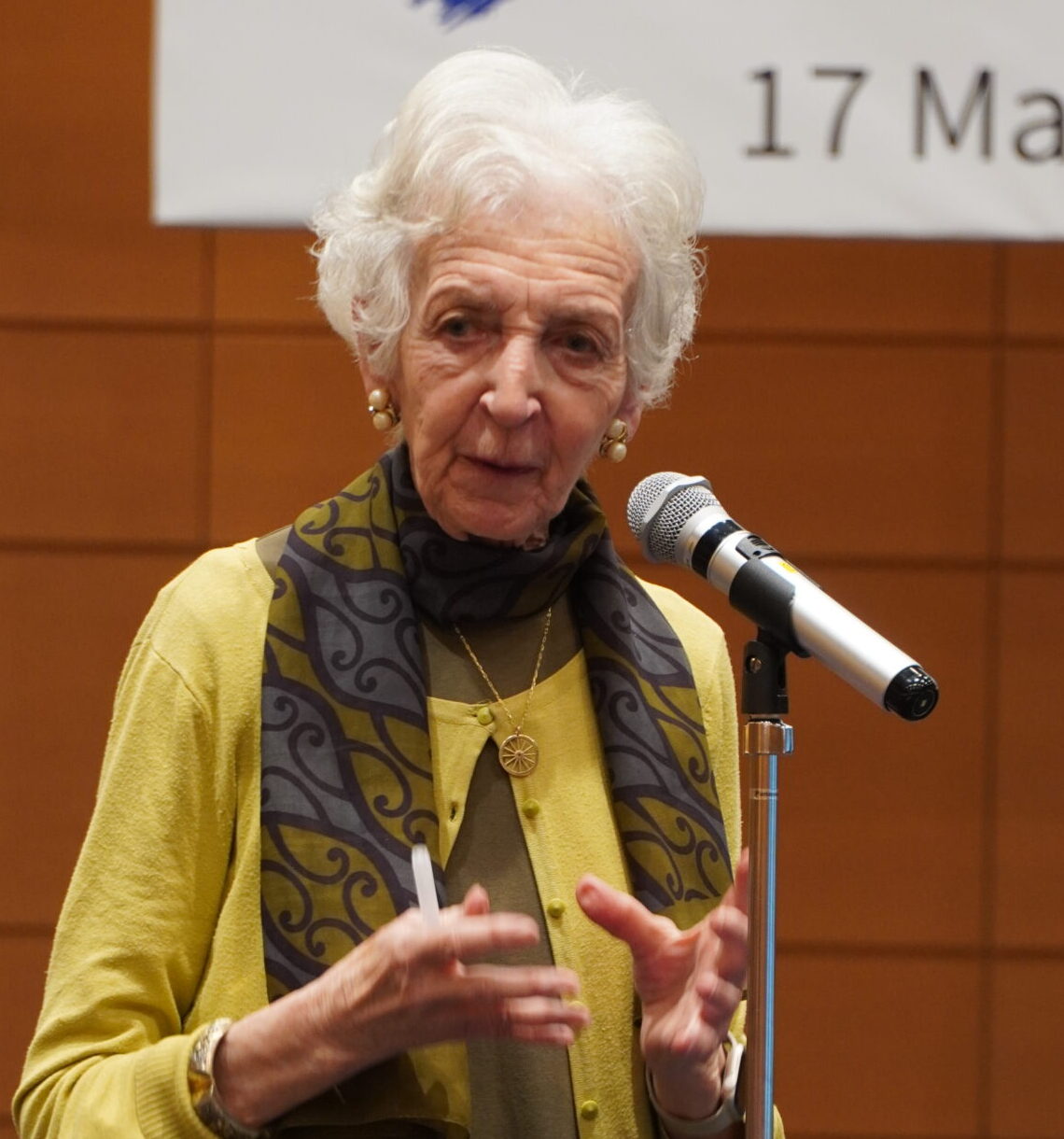
– Anastasia CRICKLEY
(Former member of CERD)
“Anti-racism and intercultural awareness training for all duty-bears is essential. Groups historically subjected to discrimination and invisibilisation must see themselves properly reflected in all roles in society and properly reflected in history books and across the curriculum at every level of education without ignoring difficult aspects of national histories”.
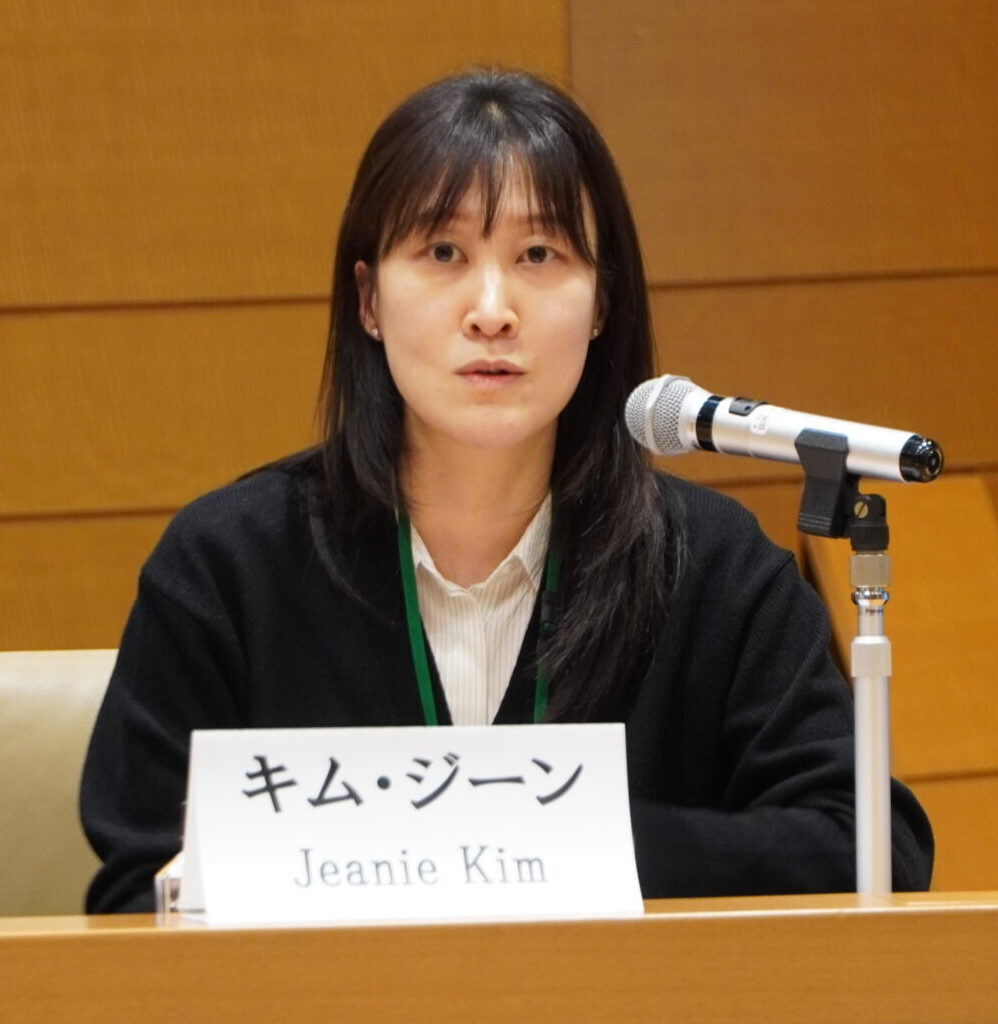
◉ CSOs and struggle for the elimination of racial discrimination in Republic of Korea
– Jeanie KIM
(Duroo – Association for Public Interest Law)
“As neighbours, South Korea and Japan share more than just geographical proximity, both countries have been influenced by the ideology of ethnic homogeneity. However, this reality is rapidly changing. As of 2024, South Korea’s foreign resident population has reached approximately 2.65 million people, accounting for nearly five percent of the total population. Despite this, our legal and institutional frameworks have struggled to keep pace”.
How civil society fights against racial discrimination
◉ Through the initiatives of the Japan Federation of Bar Associations (JFBA)
“JFBA has participated in the past reviews by submitting our reports and lobbying the Committee members in Geneva. Recommendations issued by the Committee are instructive for our legal work. We have made a model act on hate speech and issued opinion letters as well as presidential statements calling for prompt measures to combat racial discirmination”.
◉ Through campaigning for legislation of racial discrimination
― Japan Network towards Human Rights Legislation for Non-Japanese Nationals& Ethnic Minorities
“Discrimination and xenophobia are persistent global issues. Japan lacks national policies to prohibit and eliminate racial discrimination. It does not have an anti-discrimination law as well as National Human Rights Institution. Moreover, Japan has yet to declare the competence of UN human rights treaty bodies to receive individual communications”.
◉ Through networking among stakeholders in Japan
― Japan NGO Network for the Elimination of Racial Discrimination (ERD Net)
“ERD Net, as a network of minority groups and civil groups, has intervened in the past CERD reviews. Through the all reviews, we have witnessed the same concerns and recommendations repeatedly made by the Committee, while the Government has remained in the same position saying, ‘under due consideration’”.
The adoption of Declaration for the Future marked the formal closure of the event.
* Message from Hanae Hanzawa (Anti-Racial Discrimination Advisor for Asia and Pacific, OHCHR Regional Office for South-East Asia) can be found here.