Civil society and human rights of people of African descent (HRC43, 2020, Joint-OS)

March 13, 2020

IMADR delivered the joint oral statement on “Civil society and human rights of people of African descent” at the 43rd session of the Human Rights Council. Whole text can be read below or download here.

The joint statement is co-sponsored by Minority Rights Group International and supported by the International Institute on Race, Equality and Human Rights (Race & Equality).

———

Joint Oral Statement: 43rd session of the Human Rights Council

Debate on the midterm review of the International Decade for People of African Descent

13 March 2020

Thank you, Madam President,

In this joint statement, we want to highlight the critical role of civil society organisations in combatting violence and discrimination against people of African descent.

At the international level, our organisations cooperate with UN human rights mechanisms for the effective implementation of international standards on the right to equality and non-discrimination. For instance, we support the engagement of Afro-descendant human rights defenders with the Committee on the Elimination of Racial Discrimination (CERD), other treaty bodies as well as in the framework of the UPR, to hold States accountable for violations of the human rights of persons of African descent and stimulate the adoption and implementation of legal and policy measures in preventing, addressing or remedying discrimination in law and practice.

Moreover, we are pleased to have contributed to the OHCHR fellowship programme for people of African-descent as civil society partners. The fellowship plays an important role in promoting the exchanges between Afro-descendant human rights defenders, and by strengthening their engagement with international stakeholders, including international NGOs.

At the national level, we work to improve the human rights situation of people of African descent in different regions. In Tunisia, Minority Rights Group and its local partners have established Anti-Discrimination Points across the country, where Tunisians of African descent and migrants, alongside other minorities and LGBT Tunisians can report violations of their rights and find legal, social and psychological support. MRG also works with Afro-descendants in Yemen, Iraq and across the MENA region, to document their situation and assist them as they seek to secure their rights. In the Americas, our partner Race and Equality is advocating for the ratification of the Inter-American Convention against racism, racial discrimination and related forms of intolerance; and it has raised awareness about the need of developing National Actions Plans for the Decade for People of African Descent as none of the countries in the region has done so yet.

However, the lack of resources and the threats of intimidation or reprisal often prevent Afro-descendant human rights defenders from engaging with the UN human rights system. In many countries, Afro-descendant communities are not consulted by States for the design and implementation of anti-discrimination measures. Therefore, we call upon States to support civil society, in particular Afro-descendant human rights defenders, in their efforts to combat racial discrimination including through the use of relevant international human rights instruments as outlined in the programme of activities[1].

We thank you.

[1] https://www.un.org/en/observances/decade-people-african-descent/recognition
Share on:

Related Content

【Report】Seminar: New Initiatives Towards Comprehensive Anti-Discrimination Legislation‐ Japan, Asia and the World

  Amid the growing calls in Japan and around the world for the enactment of comprehensive anti- discrimination legislation, IMADR hosted a seminar on comprehensive anti-discrimination laws on November 9. The seminar brought together a researcher, a UN human rights officer, and legal practitioners to examine ongoing efforts toward legal enactment by academia and NGOs across Japan, Asia, and globally, as well as current international trends and the challenges facing Japan. This report provides an overview of the event and its key discussions. Highlights from the Presentations “Toward the Enactment of Comprehensive Anti-Discrimination Legislation”: Recommendations from the Science Council of Japan ― Mari Miura, Professor, Faculty of Law, Sophia University; Member of […]
November 19, 2026

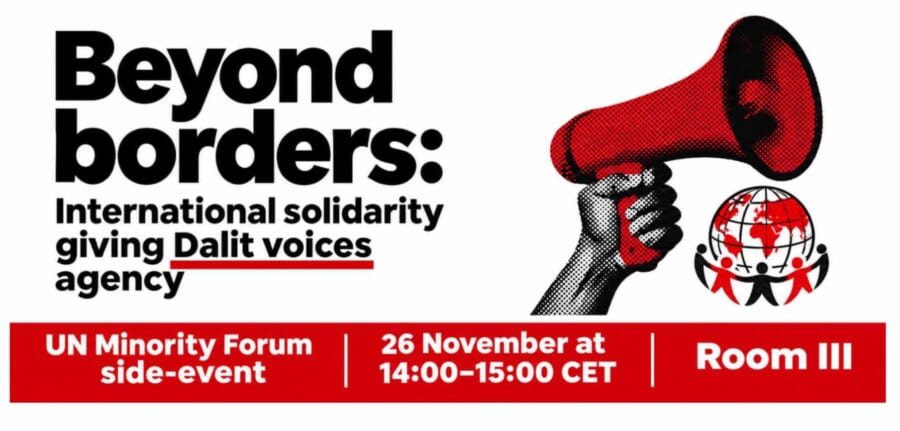
【FMI 19 Side Event】Beyond borders: International solidarity giving Dalit voices agency

IMADR is co-sponsoring the side event on “Beyond borders: International solidarity giving Dalit voices agency” at 19th session of UN Forum on Minority Issues. Date: 26 November 2026 at 14:00 – 15:00 (CET) Place: Room III, Palais de Nations, Geneva Bringing together representatives from India, Bangladesh and Pakistan, UN experts and international NGOs, this event will examine how transnational alliances can strengthen Dalit voices, and the influence of Dalit human rights defenders within the minority rights framework. <Speakers> Ashwini K.P. – UN Special Rapporteur on contemporary forms of racism, racial discrimination, xenophobia, and related intolerance Heman Das – Senior Researcher, South Asia Research Institute for Minorities (SARIM), Pakistan Jayalakshmi Itla […]
November 17, 2026

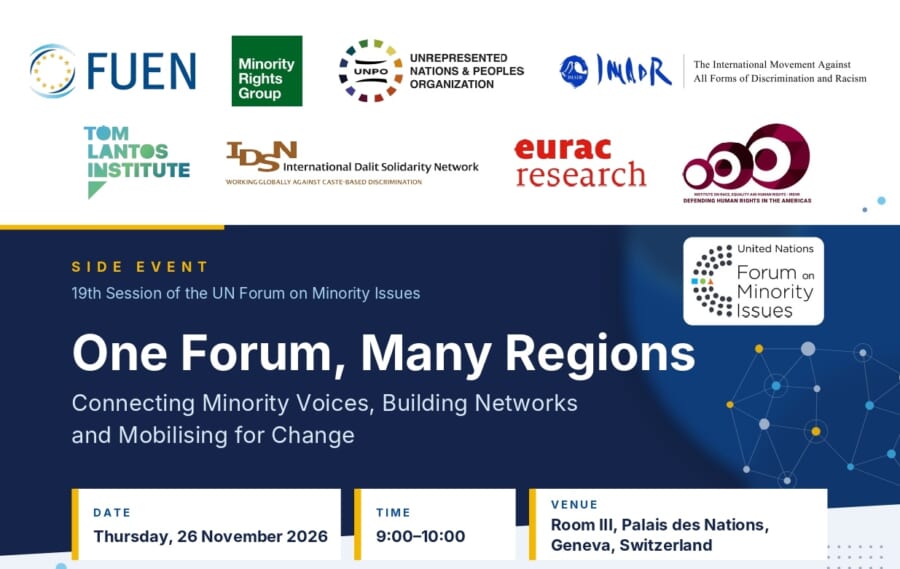
【FMI19 Side Event】One Forum, Many regions – Connecting Minority Voices, Building Networks and Mobilising for Change

IMADR is co-sponsoring the side event “One Forum, Many regions” at the 19th session of the UN Forum on Minority Issues. Date : 26 November 2026 at 9:00-10:00 (CET) Place: Room III, Palais des Nations, Geneva This side event will showcase good practices and experiences from Europe, the Americas, Asia and Africa, highlighting the value of cross-regional networks in strengthening minority advocacy and ultimately delivering minority rights fulfilment. The event will also highlight good practices in addressing barriers to minority participation in regional and international advocacy, while considering existing and emerging challenges. <Speakers> Marcus Oda – Programme Manager, Human Rights of Minorities, Tom Lantos Institute (TLI) Luciana Viegas– Executive Director, […]
November 16, 2026

CERD 117th session summary: Burkina Faso, Cuba, Cyprus, Serbia, Slovenia, and Uzbekistan

From 13 April to 1 May 2025, the UN Committee on the Elimination of Racial Discrimination (CERD) held its 117th session. During the session, CERD reviewed and adopted concluding observations on the reports of Burkina Faso, Cuba, Cyprus, Serbia, Slovenia, and Uzbekistan. Highlights of the session included: List of issues prior to reporting for Tonga was adopted, and follow-up reports from Albania, Argentina, Brazil, Italy, Qatar, and Turkmenistan were reviewed. Under its Early Warning and Urgent Action procedures, three statements were issued on the adoption of the “Death Penalty for Terrorists Law” in Israel, the overrepresentation of Indigenous children in Australia’s criminal justice system, and the political participation of Indigenous […]
May 13, 2026
TOP