UN rights experts stand for human rights defenders in Sri Lanka

November 4, 2014

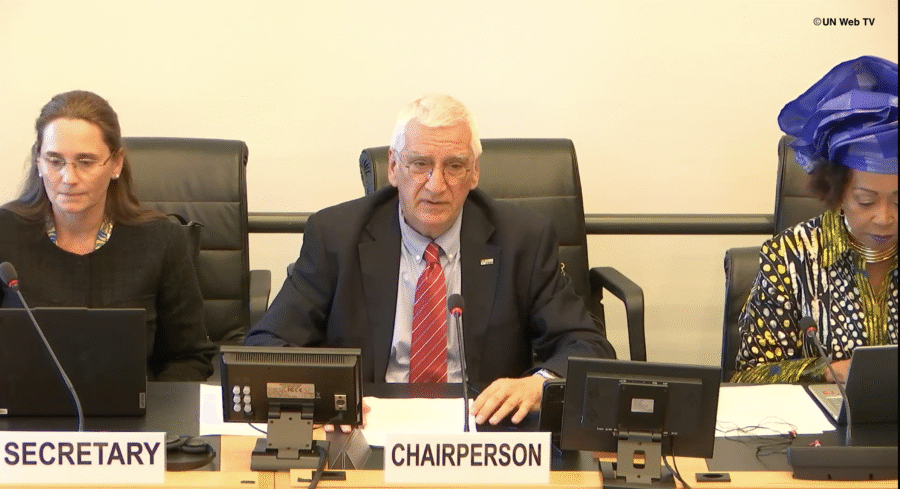
United Nations Human Rights Committee, a body of the International Covenant on Civil and Political Rights composed of 18 independent experts, expressed its concern on the information in which human rights defenders, journalists, lawyers and others have reportedly been facing intimidation and harassment including physical attacks, death threats and administrative detention. It also concerned on defamation campaigns against human rights defenders and the State’s failure to hold perpetrators of reprisals accountable.

IMADR presented a joint oral intervention with FORUM-ASIA on “Attacks and reprisals against human rights defenders” at the NGO briefing with the Committee.
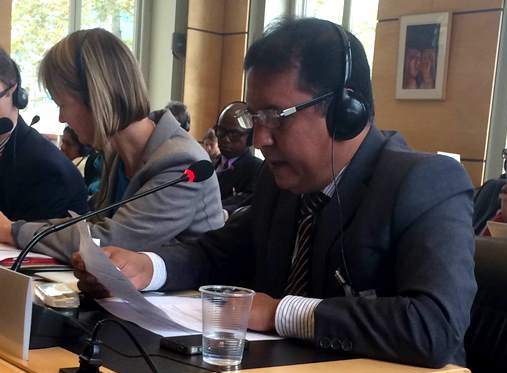
Civil society representative from Sri Lanka reading the joint statement before the Committee

In its concluding observations, the Committee recommended the Government of Sri Lanka the followings with regard to freedom of expression and the participation in the political process:

  • “The State party should refrain from any measures amounting to intimidation or harassment taken against persons exercising the right to freedom of expression, and ensure that any restriction to the right is in compliance with article 19, paragraph 3 of the Covenant.”;
  • “It should vigorously investigate all cases of threats and attacks against journalists, lawyers, clergymen, political activists, NGO workers and human rights defenders, hold the perpetrators accountable, and provide effective remedies to victims.”; and
  • “Furthermore, it should ensure that any individual or organization can freely provide information to the Committee and protect them against any reprisals for providing such information.”

The concluding observations of the Committee reflected the joint civil society submission and the individual report of IMADR to the treaty body, which addressed the issues of independence of judiciary, discrimination and violence against women, abortion, the Prevention of Terrorism Act, enforced disappearances, freedom of expression and the right to life in relation to accountability.

At various United Nations human rights bodies, especially at the Human Rights Council, IMADR has been calling for truth, justice and accountability in Sri Lanka with regard to a series of serious violations of international humanitarian and human rights law, including extrajudicial killings, enforced disappearances, wide scale civilian casualties and the Muttur massacre. In the concluding observations’ paragraph 15 on the right to life, the Committee also recommended the Government to Sri Lanka to:

(a) “Cooperate with the Office of the High Commissioner for Human Rights in investigating all allegations of serious human rights violations”; and,

(b) “In the context of the Muthur and Trincomalee cases as well as other similar cases, consider allowing witness testimony by video-link from secure and secret locations in order to facilitate the investigations with due regard to the needs of witness protection.”

The archived webcast of the review of Sri Lanka by the Human Rights Committee is available online.
Share on:

Related Content

【EVENT】Multifaceted Approach to Eliminating Racial Discrimination

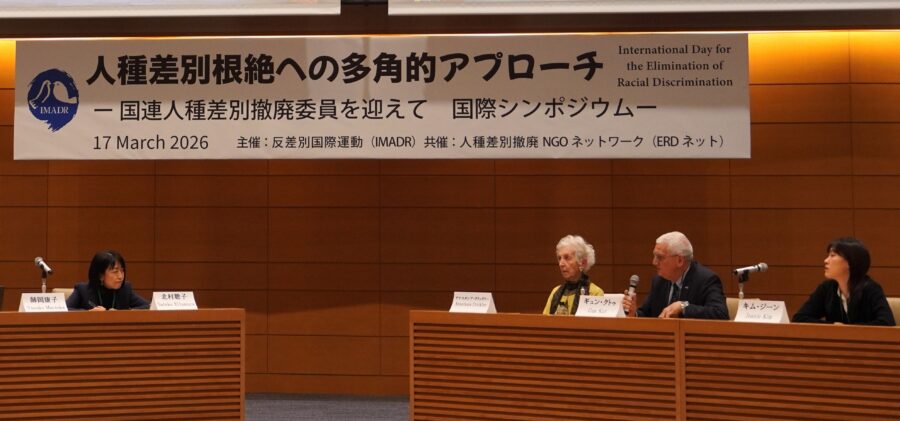
On the occasion of the 60th anniversary of the ICERD and the 30th anniversary of Japan’s accession, and welcoming the LOIPR of CERD to Japan, IMADR and partner NGOs jointly identify challenges we face in our work for the elimination of racial discrimination through the consultation with the Committee experts we invite, and make strategic plans for the next steps. It should give impacts and pressure to the Government in its preparation for its next periodic report to the Committee, to the politicians to work more on the issues of racism and discrimination and to the civil society to join us towards the elimination of racial discrimination. With Experts from […]
February 17, 2026

Joint NGO report to CERD for the preparation of LOIPR

A list of issues prior to reporting (LOIPR) for Japan, containing 59 items, was adopted by the Committee on the Elimination of Racial Discrimination (CERD) during its 116th session. IMADR and the Japan NGO Network for the Elimination of Racial Discrimination (ERD-Net) contributed to this process by submitting joint NGO reports. *You can find LOIPR issued by CERD here. ▼ Download our report: Part A (highlighting legal framework in Japan; hate speech and hate crime; racial profiling) Part B (highlighting minorities, including Buraku people, Ainu Indigenous Peoples, people in the Ryukyus and other residents in Okinawa Prefecture, women belonging to minority groups, and returnees from China and their families) Part […]
January 5, 2026

CERD 116th session summary: Burundi, Guatemala, Maldives, New Zealand, Sweden and Tunisia

From 17 November to 5 December 2025, the UN Committee on the Elimination of Racial Discrimination (CERD) held its 116th session. During the session, CERD reviewed and adopted concluding observations on the reports of Burundi, Guatemala, Maldives, New Zealand, Sweden and Tunisia. Highlights of the session included: The lists of issues prior to reporting for Japan and Panama were adopted, and follow-up reports from Bolivia, Mexico, Moldova, San Marino and Vietnam were reviewed. Joint general recommendations 38 and 39 were adopted on eradicating xenophobia towards migrants and other perceived as such. (Its advanced unedited version can be found here; EN, FR, and ES) A high-level commemorative event was held to […]
December 11, 2025

Joint NGO Statement: URGENT SUPPORT NEEDED FOR THE UN TREATY BODIES

Public Statement by Civil Society Organisations on the Occasion of the 37th Annual Meeting of the Chairpersons of the UN Human Rights Treaty Bodies 12 June 2025 The undersigned civil society organisations issue this statement at a time of profound crisis of the UN, and the human rights mechanisms in particular. The international human rights treaties are an essential part of the UN’s human rights ecosystem and form the legal backbone of the international human rights system. The work of the Treaty Bodies is crucial in monitoring States parties’ implementation of international human rights treaties and in providing authoritative guidance on the fulfilment of obligations. Treaty Bodies deliver justice to individual victims, […]
June 16, 2025
TOP