
【HRC 63 Written Statement】Report on Enforced Disappearance in Sri Lanka
August 24, 2026
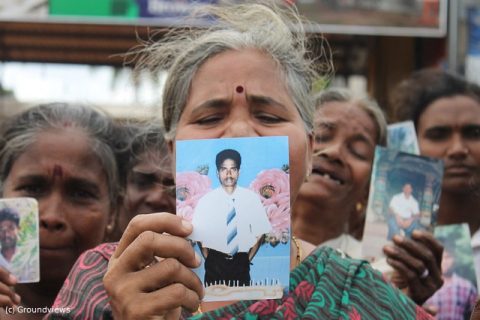
IMADR has submitted a written statement to the 63rd session of the Human Rights Council on the situation of enforced disappearance in Sri Lanka, calling for justice for the Families of the Disappeared. Its PDF version can be found here.
Introduction
This report presents recommendations to the OHCHR to strengthen efforts to address Sri Lanka’s long-standing problem of enforced disappearances. They are based on the experiences of Families of the Disappeared, civil society organisations and affected communities that have spent many years seeking truth, justice and accountability. Despite repeated complaints, investigations, public campaigns and discussions with successive governments, many families still have no clear information about the fate or whereabouts of their loved ones. For these families, enforced disappearance is not simply a matter of the past; it remains an unresolved human rights issue that continues to affect their lives.
Since 2012, the Families of the Disappeared and the Mannar Citizen Committee (MCC) have increasingly called for an international inquiry because of their concerns about the effectiveness of domestic processes. Following Sri Lanka’s co-sponsorship of UN Human Rights Council Resolution 30/1 in 2015, families and civil society organisations renewed their efforts to see the government fulfil its commitments. The delay in establishing the Office on Missing Persons (OMP) led to public campaigns calling for the institution to be established and made effective. Although the OMP was eventually established, families continue to raise concerns about limited resources, inadequate staffing, delays in investigations, insufficient communication and the lack of publicly available findings.
The OMP needs adequate resources, skilled staff, clear investigation timelines and transparent procedures, while regularly consulting Families of the Disappeared and civil society organisations to strengthen investigations, address shortcomings and rebuild public confidence.
The Office for Reparations should also receive adequate resources to provide timely assistance to affected families. However, financial assistance should never replace the search for truth, justice and accountability. Reparations should address economic, social and psychological consequences suffered by families. At the same time, the government must demonstrate genuine political commitment and ensure that cases are addressed fairly, regardless of the political party or period in which the alleged violations occurred.
Because domestic mechanisms have produced limited results, the government should cooperate more meaningfully with OHCHR, and other international mechanisms.
Mass graves and unidentified human remain require urgent and independent investigation according to internationally recognised forensic standards. A secure DNA preservation and identification system should be established to compare recovered remains with samples voluntarily provided by relatives of disappeared persons. This could help families obtain scientifically verified answers after decades of uncertainty.
The government should ensure credible investigations into unresolved and emblematic cases, including those involving Kapila Kumara and Rohana Wijeweera and allegations concerning the Batalanda torture camp. Families, witnesses and human rights defenders must be protected, while police, military, prison, court and other relevant records should be preserved.
Ultimately, success should not be measured simply by the number of complaints received or investigations completed. It should be measured by whether families finally receive credible answers about what happened to their loved ones.
Recommendations
1. The Shortcomings of the Office on Missing Persons (OMP)
Families initially placed great hope in the OMP after its establishment. However, concerns remain about its effectiveness, transparency and capacity. Although the OMP has reportedly received around 19,000–21,000 complaints, insufficient public awareness may have prevented some families from registering their cases. The OMP has also stated that several inquiries have been completed, but families and civil society organisations are still waiting for clear information about the findings. Completing an inquiry should not simply lead to temporary financial assistance; families need to know what happened to their loved ones. The OMP should publish its findings, set clear investigation timelines and refer cases requiring further legal action to relevant authorities.
The OMP continues to face serious staffing shortages. Although around 250 staff members are reportedly needed, only a limited number were available until recently, with recruitment for additional positions now underway. Adequate investigators, legal officers, forensic experts and field staff are essential to address thousands of pending cases. Regular consultations with Families of the Disappeared and civil society groups must also resume to identify gaps, share information and rebuild public confidence in the OMP.
2. Political Commitment and Accountability
Successive governments have failed to demonstrate sufficient political will to resolve the issue of enforced disappearances. Families have repeatedly placed their hopes in new administrations, including the present National People’s Power government, particularly because some disappeared persons were alleged to have been associated with or suspected of supporting the Janatha Vimukthi Peramuna. However, families continue to seek clear evidence of meaningful government action.
Against this backdrop, the Government should demonstrate a firm and measurable commitment to resolving outstanding cases, regardless of the political period in which the disappearances occurred. It should cooperate fully with the OMP and the Office for Reparations (OR) and provide them with the resources required to function effectively.
The Government should also provide clear information on unresolved and emblematic cases. These include the allegations surrounding the Batalanda torture camp, the disappearance of Kapila Kumara, and the alleged killing of Rohana Wijeweera. Parliamentary discussions or referrals to state institutions should be followed by transparent investigations and concrete action. Families should not be left waiting indefinitely without information about the progress or outcome of such cases.
3. Strengthening the OMP and Supporting Families
The OMP should immediately conduct a comprehensive public awareness campaign to encourage families who have not yet registered their disappeared relatives to come forward. This campaign should particularly target the North, East and other affected areas and should explain clearly how families can register complaints and access available assistance. If the OMP and OR jointly provide clear information about the Rs. 200,000 temporary allowance and ensure that eligible families receive it without unnecessary delays, more families may be encouraged to register their cases.
The OMP should establish a permanent consultation mechanism with Families of the Disappeared, civil society organisations and relevant officials. Regular meetings should be held to discuss the progress of investigations, institutional difficulties and recommendations for improvement. The OMP should also publish the findings of completed investigations, while protecting sensitive information and the privacy and safety of victims and witnesses. The purpose of the process must remain the establishment of truth about the fate and whereabouts of disappeared persons, rather than simply processing applications for financial assistance.
4. International Assistance, Forensic Investigation and Reparations
The Government should cooperate with credible international mechanisms and allow international experts to assist in mass grave investigations and excavations. These processes must follow recognised forensic standards, ensure proper documentation and evidence preservation, maintain transparent chain-of-custody procedures, and strengthen public confidence.
Sri Lanka should also establish a secure national system for preserving DNA recovered from unidentified human remains and create a voluntary DNA database of close relatives of disappeared persons. Strong safeguards must be established to protect privacy and prevent misuse of genetic information.
The Government should adequately resource the OMP and OR and establish fair and comprehensive reparations for affected families. Temporary assistance must be provided promptly, while long-term measures address economic, social and psychological impacts without replacing truth, justice and accountability.
The Government should establish measurable timelines and publicly report on progress. For the Families of the Disappeared, success cannot be measured simply by the number of inquiries conducted. The true measure of progress is whether families finally receive credible answers about what happened to their loved ones, where they are, and who is responsible. OHCHR should continue to monitor this process, engage directly with affected families and civil society, and provide technical and international support where domestic mechanisms remain unable to deliver meaningful results.
_______________________
Committee on Enforced Disappearances. (2025a). Concluding observations on the report submitted by Sri Lanka under article 29 (1) of the Convention (CED/C/LKA/CO/1). United Nations.
Committee on Enforced Disappearances. (2025b). Replies of Sri Lanka to the list of issues in relation to its report submitted under article 29 (1) of the Convention (CED/C/LKA/RQ/1). United Nations.
Committee on Enforced Disappearances. (2025c). Report on follow-up to the concluding observations of the Committee on Enforced Disappearances (CED/C/28/2). United Nations.
Human Rights Commission of Sri Lanka. (2024). Letter to the Attorney General regarding alleged enforced disappearance of Mr. Kapila Kumara De Silva.
Human Rights Commission of Sri Lanka. (2026, June 19). Follow-up meeting on the implementation of the Committee on Enforced Disappearances concluding observations.
International Centre for Ethnic Studies. (2025). Shadow report submitted to the Committee on Enforced Disappearances: Enforced disappearances and impunity in Sri Lanka.
Office for Reparations, Sri Lanka. (n.d.). Grants to families of missing persons. Government of Sri Lanka.
Office on Missing Persons, Sri Lanka. (n.d.). Official website and complaint-registration system.
Office of the United Nations High Commissioner for Human Rights. (2024). Accountability for enforced disappearances in Sri Lanka. United Nations.
Presidential Secretariat, Sri Lanka. (2025, April 29). Batalanda Commission report handed over to Attorney General. Government of Sri Lanka.
United Nations Resident Coordinator in Sri Lanka. (2025). Statement on the International Day of the Victims of Enforced Disappearances. United Nations in Sri Lanka.
Related Content
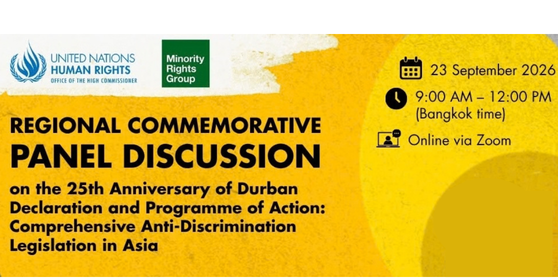
Launch of the Asia Alliance for Comprehensive Anti-Discrimination Legislation
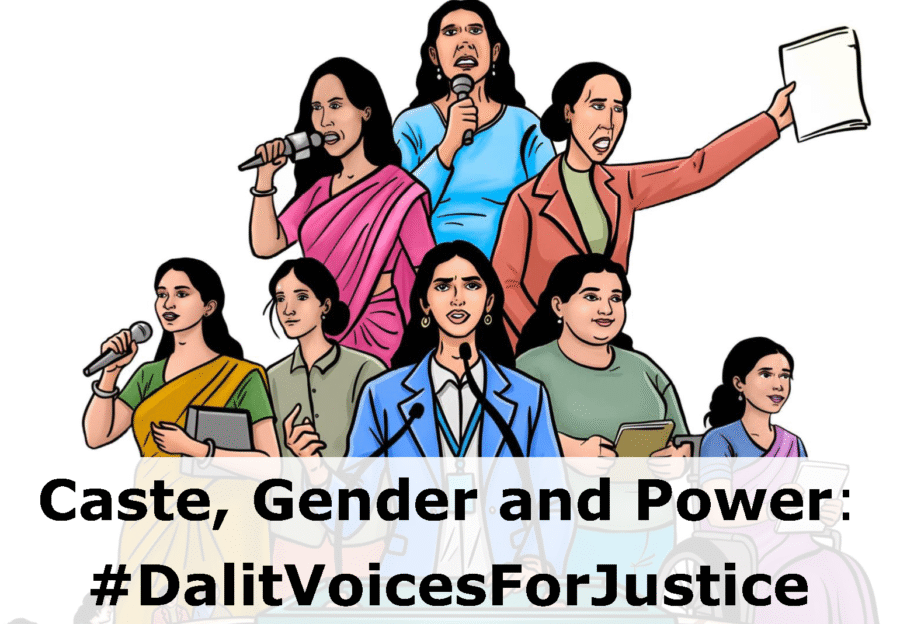
【HRC62 Side Event】Caste, Gender and Power: #DalitVoicesForJustice

Newsletter E-CONNECT No.40 is out