
CERD 116th session summary: Burundi, Guatemala, Maldives, New Zealand, Sweden and Tunisia
December 11, 2025
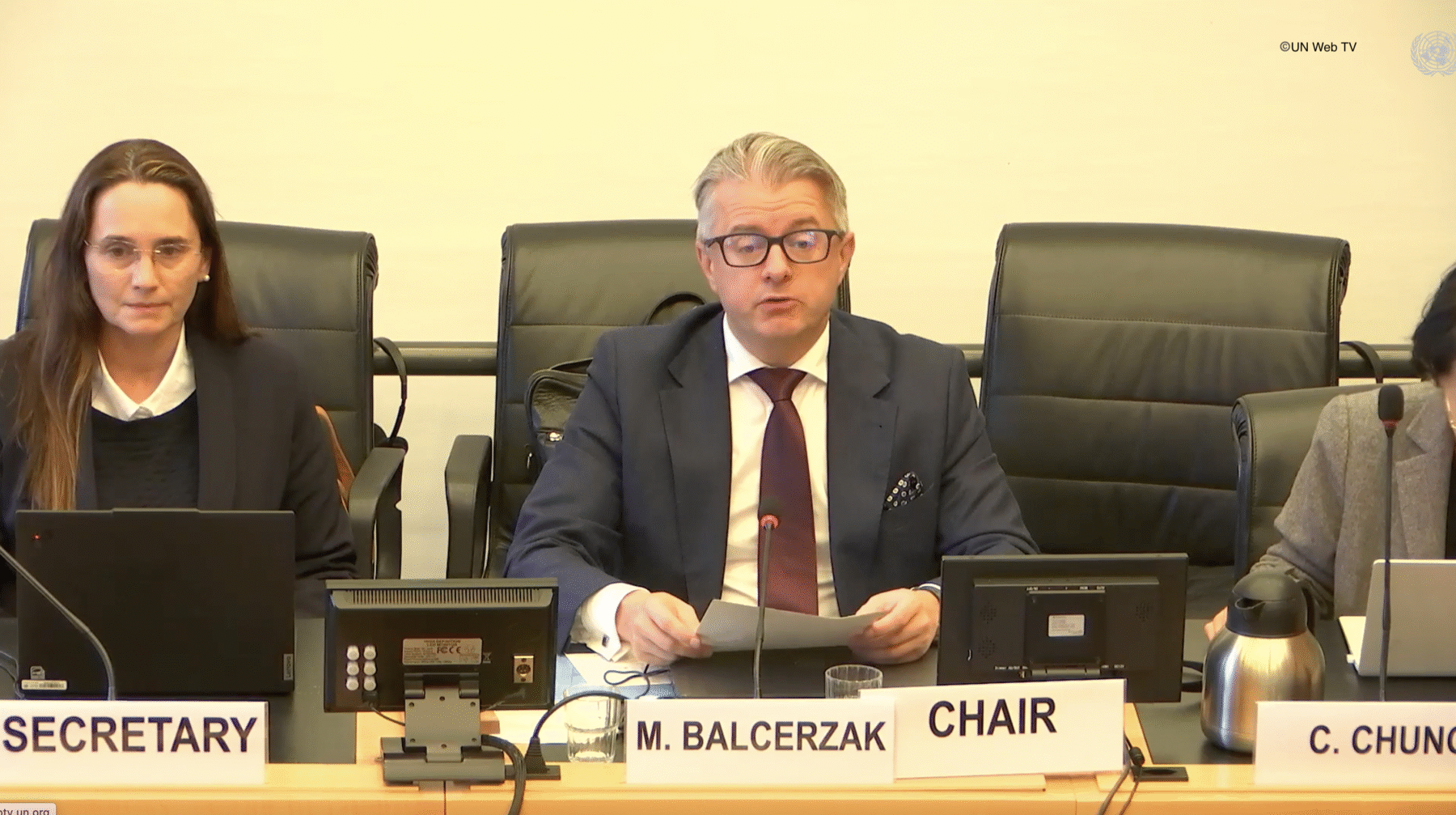
From 17 November to 5 December 2025, the UN Committee on the Elimination of Racial Discrimination (CERD) held its 116th session. During the session, CERD reviewed and adopted concluding observations on the reports of Burundi, Guatemala, Maldives, New Zealand, Sweden and Tunisia.
Highlights of the session included:
- The lists of issues prior to reporting for Japan and Panama were adopted, and follow-up reports from Bolivia, Mexico, Moldova, San Marino and Vietnam were reviewed.
- Joint general recommendations 38 and 39 were adopted on eradicating xenophobia towards migrants and other perceived as such. (Its advanced unedited version can be found here; EN, FR, and ES)
- A high-level commemorative event was held to mark the sixtieth anniversary of the International Convention on the Elimination of All Forms of Racial Discrimination.
- Under its individual complaints procedure, a decision on a case against North Macedonia was adopted, finding that several Convention provisions were violated.
- Under its Early Warning and Urgent Action procedure, 31 submissions were considered, and two decisions were adopted concerning the situation of Chagossian people and the situation in Sudan.
Concluding observations and reports of the State parties and other stakeholders are available on the session webpage. Video archives of the public meetings can be accessed at UN Web TV.
Burundi
The Committee held its constructive dialogue with Burundi on 24 and 25 November, and concluded its consideration of the 11th to 19th periodic report of the State. Despite noting Burundi’s commitment to addressing historical injustices, the Committee was concerned that Batwa Indigenous People persistently face inequalities, discrimination and stigma.
In its concluding observations, among other things, the Committee called for the establishment of consultation mechanisms to obtain Batwa’s free, prior and informed consent. It also recommended the State to adopt comprehensive anti-discrimination legislation with clear definition of racial discrimination in line with international standards.
The Committee issued recommendations on the following topics:
- Statistics
- Application of the Convention in the domestic legal order
- Legislation prohibiting racial discrimination
- Institutional framework
- National plan to combat racial discrimination
- Application of Article 4 of the Convention
- Racist hate speech (*Follow-up)
- Civic space and fundamental freedom
- Participation in public life
- Indigenous Peoples’ rights
- Situation of repatriated persons
- Right to property
- Situation of persons with albinism
- Situation of non-citizens, including migrants, asylum seekers and refugees (*Follow-up)
- Combating trafficking in persons
- Right to nationality
- Statelessness
- Complaints of racial discrimination and access to justice
- Transitional justice and the fight against impunity
- Human rights education to combat prejudice and intolerance
- Cooperation
Guatemala
On 19 and 20 November 2025, the Committee held its constructive dialogue with the State delegation of Guatemala and concluded its consideration of the combined 18th to 20th periodic reports. The Committee raised concern regarding the adverse effect of infrastructure projects as well as extractive and agro-industrial activities on the rights of the Maya, Xinka, Garífuna and Afro-descendant peoples.
In concluding observations, among others, the Committee recommended that the State party adopt special measures to prevent and mitigate adverse effects and pollution, with the aim to protect their rights to health, food, a clean, healthy and sustainable environment and so forth.
The Committee issued recommendations on the following topics:
- Data collection
- Application of the Convention
- Legal framework for combating racial discrimination
- Institutional framework for human rights and combating racial discrimination
- National plan to combat racial discrimination (*Follow-up)
- Application of Article 4 of the Convention
- Racist hate speech and hate crimes
- Structural discrimination
- Participation in political and public life
- Freedom of peaceful assembly and human rights defenders (*Follow-up)
- Freedom of expression and Indigenous communities’ radio station
- Freedom of religion
- Free, prior and informed consent
- Indigenous Peoples’ land and territories and evictions
- Situation of Indigenous women, women of afro-descent and migrant women
- Situation of migrants, asylum seekers and refugees
- Access to justice
- Transitional justice and Peace Agreement
- Education and other measures to combat racial prejudice, intolerance and to address historical legacy
Maldives
The constructive dialogue took place on 18 and 19 November, and the Committee concluded its consideration of the State party’s combined 13th to 15th periodic reports. Despite noting its measures to combat discrimination against migrants, the Committee indicated concerns over reports of xenophobic sentiment against non-citizens.
In concluding observations, among other matters, the Committee recommended developing and implementing strategies for combating xenophobia and adverse stereotypes against non-citizens such as migrant workers, bearing in mind especially prejudice against those from India and Bangladesh.
The Committee issued recommendations on the following topics:
- Statistics
- Incorporation of the Convention in the domestic legal order
- Legal framework
- Constitutional requirements on nationality and religion
- Human Rights Commission
- Hate speech
- Discrimination against migrant workers (*Follow-up)
- Detention of migrants
- Women migrant workers
- Rights of refugees, asylum-seekers and stateless persons
- Impact of climate change
- Trafficking in persons
- Human rights defenders
- Access to justice (*Follow-up)
- Diversity and tolerance
New Zealand
New Zealand had a constructive dialogue with the Committee on 25 and 26 November 2025, and the Committee concluded its consideration of the combined 23rd and 24th periodic reports. The Committee raised its concern that cases of racially motivated attacks targeting Māori, Pacific peoples, and other ethnic and religious communities continued to be reported. It also expressed its concern that recent initiatives to reinterpret the Treaty of Waitangi are proceeding without Māori’s meaningful participation, despite the Treaty’s longstanding recognition as the foundational framework governing the relationship between the Crown and Māori.
In its concluding observations, among others, the Committee called upon the State party to strengthen both legislative and policy framework in order to sufficiently address hate crimes in consultation with the concerned, ensure that cases of hate crimes are effectively investigated and prosecuted and expand education and awareness-raising efforts. Furthermore, it urged the State party to uphold the commitment to the Treaty of Waitangi and ensure that Māori’s free, prior and informed consent is obtained in the process of the aforementioned initiatives.
The Committee issued recommendations on the following topics:
- Data collection
- Convention in the domestic legal order
- Convention and the national framework for its implementation
- National human rights institution
- Complaints of racial discrimination
- Access to justice
- Administration of criminal and juvenile justice
- Children in alternative care (*Follow-up)
- Racist hate speech and hate crimes
- Racist organisations and propaganda
- Structural discrimination
- Intersectional discrimination
- Employment
- Education
- Health (*Follow-up)
- Treaty of Waitangi (*Follow-up)
- Māori land rights
- Environment and climate change
- Political participation
- Māori cultural rights
- Māori language
- Situation of immigrants, refugees and asylum-seekers
- Situation of migrant workers
- Racial stereotypes
Sweden
The constructive dialogue took place on 20th and 21st November 2025, and the Committee adopted its concluding observations on the combined 24th to 25th periodic reports of Sweden. The Committee indicated its concern over the recent amendment to the Police Act allowing law enforcement agencies to designate “security zones” and conduct stop-and search operations, in addition to racial profiling.
In its concluding observations, among other things, the Committee recommended revising its framework on law enforcement in order to ensure that racial profiling is explicitly prohibited, stop-and-search operations are carried out lawfully, non-arbitrarily and without discrimination and establish robust monitoring and review mechanisms.
The Committee issued recommendations on the following topics:
- Statistics
- The Convention in the domestic legal order
- Discrimination Act
- Policy framework
- Racist hate crime and hate speech
- Complaints of racial discrimination, hate speech and hate crimes
- Racial profiling
- Special measures to address structural discrimination
- Right to health
- Right to adequate housing
- Right to employment
- Racism in sports
- Intersecting forms of discrimination
- Children belonging to groups protected under the Convention (*Follow-up)
- Roma
- People of African descent
- Muslim ethno-religious groups
- Sámi people
- Transitional justice (*Follow-up)
- Situation of no-citizens (*Follow-up)
- Tidö Agreement
- Reparation for colonialism and slavery
- Training, education and other measures to combat prejudice and intolerance
Tunisia
On 26th and 27th 2025, the Committee held its constructive dialogue with the State delegation of Tunisia, and concluded its consideration of the combined 20th to 22nd periodic reports. The Committee raised its concern on the suspension of human rights organisations dedicated to promoting and defending ethnic minority rights, on top of the growing intimidation, surveillance, harassment, reprisals and arbitrary arrests targeting human rights defenders.
In its concluding observations, among others, the Committee called upon the State party to take effective measures for an open space for human rights work. Also, it urged the State party to carry out thorough and impartial investigations into all reported cases of intimidation and reprisals.
The Committee issued recommendations on the following topics:
- Statistics
- National human rights institution
- Legislative and institutional frameworks (*Follow-up)
- Complaints of racial discrimination and hate crimes
- Independence of the judiciary
- Racial profiling and racially motivated police violence
- Civic space
- Black Tunisians
- Amazigh ethnic minority group
- Ethnic minority groups in political and public affairs
- Legislative framework on migration
- Situation of sub-Saharan migrants since February 2023 (*Follow-up)
- Trafficking in persons
- Undocumented migrant workers
- Training, education and other measures to combat prejudice and intolerance
*The date of next session is yet to be confirmed. During 117th session, the reports of Burkina Faso, Colombia, Cuba, Cyprus, Serbia, Slovenia, and Uzbekistan will be reviewed.