
CERD 117th session summary: Burkina Faso, Cuba, Cyprus, Serbia, Slovenia, and Uzbekistan
May 13, 2026
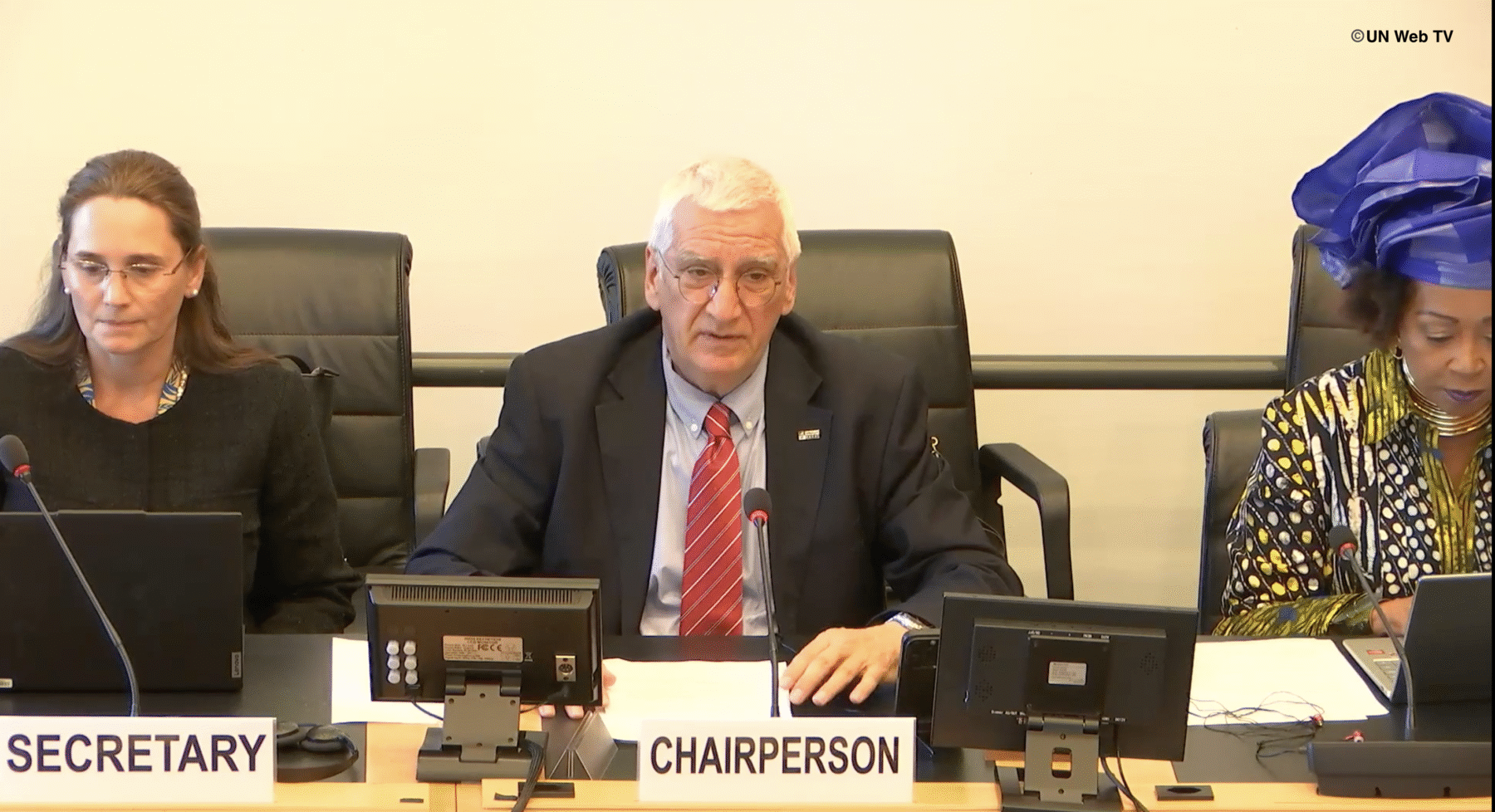
From 13 April to 1 May 2025, the UN Committee on the Elimination of Racial Discrimination (CERD) held its 117th session. During the session, CERD reviewed and adopted concluding observations on the reports of Burkina Faso, Cuba, Cyprus, Serbia, Slovenia, and Uzbekistan.
Highlights of the session included:
- List of issues prior to reporting for Tonga was adopted, and follow-up reports from Albania, Argentina, Brazil, Italy, Qatar, and Turkmenistan were reviewed.
- Under its Early Warning and Urgent Action procedures, three statements were issued on the adoption of the “Death Penalty for Terrorists Law” in Israel, the overrepresentation of Indigenous children in Australia’s criminal justice system, and the political participation of Indigenous Peoples in New Caledonia.
- Discussion continued on the draft General Recommendation No. 40 on reparations for the transatlantic trade in Africans for chattel slavery and the ensuing and continuing harms inflicted on people of African descent (the first draft can be found here).
- CERD agreed to begin preparations for GRs on communities discriminated based on work and descent, Indigenous Peoples, and racism in sport after GR No. 40 is adopted.
- CERD Guidelines on the third-party interventions (TPIs) to individual communications were adopted.
This year marks 25th anniversary of the Durban Declaration and Programme of Action.
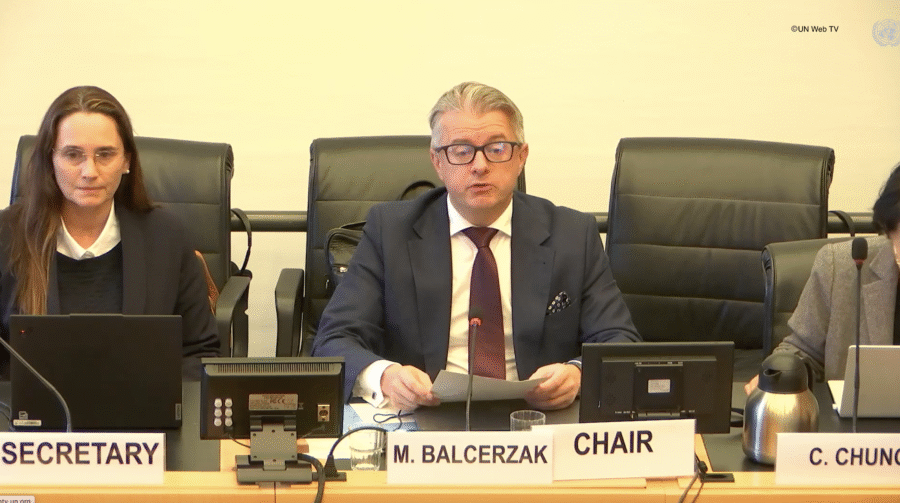
Concluding observations and reports of the State parties and other stakeholders are available on the session’s page. Video archives of the public meetings can be accessed at UN Web TV.
Burkina Faso
Burkina Faso held its constructive dialogue with CERD on 22 and 23 April 2026 and CERD concluded the combined 20th to 24th periodic reports of the State. The Committee gravely concerned about serious human rights violations against members of Fulani ethnic group during military and security operations. Also, while noting measures taken by the State, the Committee remained concerned about persistent discrimination against persons of slave descent.
In its concluding observations, among other things, the Committee urged the State party to ensure that all allegations are promptly and impartially investigated, and that perpetrators are prosecuted and punished. It further called upon the State party to address structural causes of discrimination based on descent and prohibit all forms of discrimination, stigmatisation and segregation.
The Committee issued recommendations on the following topics:
- Statistics
- Application of the Convention
- Legal definition of racial discrimination
- National Human Rights Commission
- Hate speech and incitement to violence (*Follow-up)
- Situation of the Fulani ethnic group (*Follow-up)
- Discrimination based on descent
- Slavery practices
- Indigenous Peoples
- Talibé (Quranic school) children, also known as Garibou children
- Inter-ethnic conflicts
- Economic, Social and Cultural rights
- Multiple and intersecting forms of discrimination against women
- Violence against women and girls, including in relation to health
- Situation of migrants, refugees and asylum-seekers
- Discrimination against persons with albinism
- Situation of human rights defenders
- Civic space (*Follow-up)
- Access to justice
- Human rights education
Cuba
On 23 and 24 April 2026, the Committee held its constructive dialogue with the State delegation of Cuba and concluded its consideration of the combined 22nd to 26th periodic reports. While recognising the State party’s measures, the Committee raised concerns about the situation of people of African descent, who continued to face poverty, marginalisation, overrepresentation in the prison population, and unequal enjoyment of rights.
In its concluding observations, among other things, the Committee asked for affirmative action at national, provincial and municipal levels. It also recommended ensuring inclusive participation of people of African descent in decision-making processes and open civic space where civil society can work without fear of threats and reprisals.
The Committee issued recommendations on the following topics:
- Data collection (*Follow-up)
- Application of the Convention (*Follow-up)
- Legislation prohibiting racial discrimination
- National Human Rights Institution
- Institutional and public policy framework to combat racial discrimination
- Application of Article 4 of the Convention
- Discrimination against people of African descent
- Excessive use of force, freedom of peaceful assembly, and racial profiling
- Situation of human rights defenders
- Freedom of religion
- Multiple forms of discrimination against women of African descent
- Migrants in an irregular situation
- Trafficking in persons
- Access to justice
- Education and other measures to combat racial prejudice and intolerance and to address historical legacies (*Follow-up)
Cyprus
Cyprus had a constructive dialogue with the Committee on 16 and 17 April, and the Committee concluded its consideration of 25th periodic reports. While noting the State party’s legal framework to address racial discrimination and measures to expand the use and teaching of Turkish, the Committee raised concerns about the absence of a unified anti-discrimination law and possible discriminatory effects of language requirements for employment on Turkish speakers in practice.
In its concluding observations, among other things, the Committee recommended adopting comprehensive anti-discrimination legislation, eliminating discriminatory language barriers, and ensuring the effective use of Turkish in education and public administration.
The Committee issued recommendations on the following topics:
- Peace process and intercommunal relations
- Statistics
- Domestic application of the Convention
- Legal framework
- National Human Rights Institution
- Hate speech (*Follow-up)
- Discrimination against migrant workers (*Follow-up)
- Detention of migrants
- Rights of refugees, asylum-seekers and stateless persons
- Trafficking in persons
- Intercommunal initiatives, interaction and freedom of movement
- Situation of Turkish Cypriots (*Follow-up)
- Situation of Roma (Kurbet)
- School bullying and violence)
Serbia
The constructive dialogue took place on 14 and 15 April, and the Committee adopted its concluding observations on the combined 6th to 9th reports of Serbia. The Committee expressed concern that victim’s lack of trust in law enforcement agencies has resulted in the incidents of racial discrimination, hate speech and hate crimes being underreported. It also raised concerns about racist hate speech in the media and online.
In its concluding observations, among other things, the Committee urged the State party to effectively implement legal framework, publicly condemn racist hate speech, distance itself from hate speech by politicians, and ensure the availability of accessible and safe reporting channels.
The Committee issued recommendations on the following topics:
- Statistics
- Convention in the domestic legal order
- Legislative framework
- Complaints of racial discrimination, hate speech and hate crimes
- Racial profiling and racially motivated police violence
- Accountability for serious violations of international human rights law and humanitarian law
- Situation of ethnic minority groups
- Suspension of permanent address (*Follow-up)
- Situation of Roma communities (*Follow-up)
- Rights to education
- Right to health
- Child marriage (*Follow-up)
- Migrants, asylum-seekers and refugees
- Trafficking in persons
- Legal aid
- Training, education and other measures to combat prejudice and intolerance
Slovenia
On 15 and 16 April 2026, the Committee held its constructive dialogue with the State delegation of Slovenia, and concluded its consideration of the combined 12th to 14th periodic reports. The Committee expressed concern over the discriminatory impact of 2025 Emergency Measures to Ensure Public Safety Act on Roma communities, particularly through the expansion of police powers and designation of “security risk areas”. Moreover, it pointed out health disparities and lower life expectancy experienced by Roma communities.
In its concluding observations, among other things, the Committee recommended reviewing the Act to bring it in line with equality and non-discrimination principles and establish safeguards against over-policing. It also recommended that the State party address the root causes of health disparities and ensure equal access to quality healthcare.
The Committee issued recommendations on the following topics:
- Data collection
- The Convention and national framework for its implementation
- Racist hate speech and hate crimes
- Racial profiling and police violence
- Emergency Measures to Ensure Public Safety Act (*Follow-up)
- Situation of Roma (*Follow-up)
- Situation of persons referred to as “the erased”
- Situation of migrants, asylum-seekers and refugees (*Follow-up)
- Human rights education to combat prejudice and intolerance
Uzbekistan
Uzbekistan had a constructive dialogue with the Committee on 21 and 22 April 2026, and the Committee concluded its consideration of the combined 13 and 14 periodic reports. The Committee expressed concern over reports that development projects have led to forced evictions of ethnic minorities, especially Luli/ Roma communities. In addition, it was deeply concerned about the inadequate or absent compensation, as well as limited access to judicial and administrative remedies.
In its concluding observations, among other things, the Committee urged the State party to halt forced evictions and house demolitions. Where eviction or demolition is unavoidable, the State party should ensure that affected families and individuals are provided with adequate alternative housing and compensation in addition to effective remedies.
The Committee issued recommendations on the following topics:
- Statistics
- National Human Rights Institution
- Prohibition of racial discrimination
- Hate crimes and hate speech
- Complaints of racial discrimination, hate speech and hate crimes
- Racial profiling and racially motivated police violence
- Legislative framework on the human rights of ethnic minority groups
- Ethnic minorities in political and public affairs
- Situation of Karakalpak ethnic group
- State response to protests of July 2022 in Republic of Karakalpakstan (*Follow-up)
- Civic space
- Situation of the Luli/ Roma
- Right to adequate housing (*Follow-up)
- Right to health
- Right to education
- Migrants and asylum-seekers (*Follow-up)
- Stateless persons
- Training, education and other measures to combat prejudice and intolerance
*The date of the next session is yet to be confirmed. During 118th session, the reports of Finland, Honduras, India and Kuwait will be reviewed.